Australia has a deep and diverse history of wine, with the first cuttings arriving with the First Fleet via South Africa in 1788. The first commercial operations took off in what is now New South Wales the 1820s, and in the ensuing 200 years Australian Wine has grown through booms, busts, and bubbles, to rise above and earn a robust reputation on the global market.
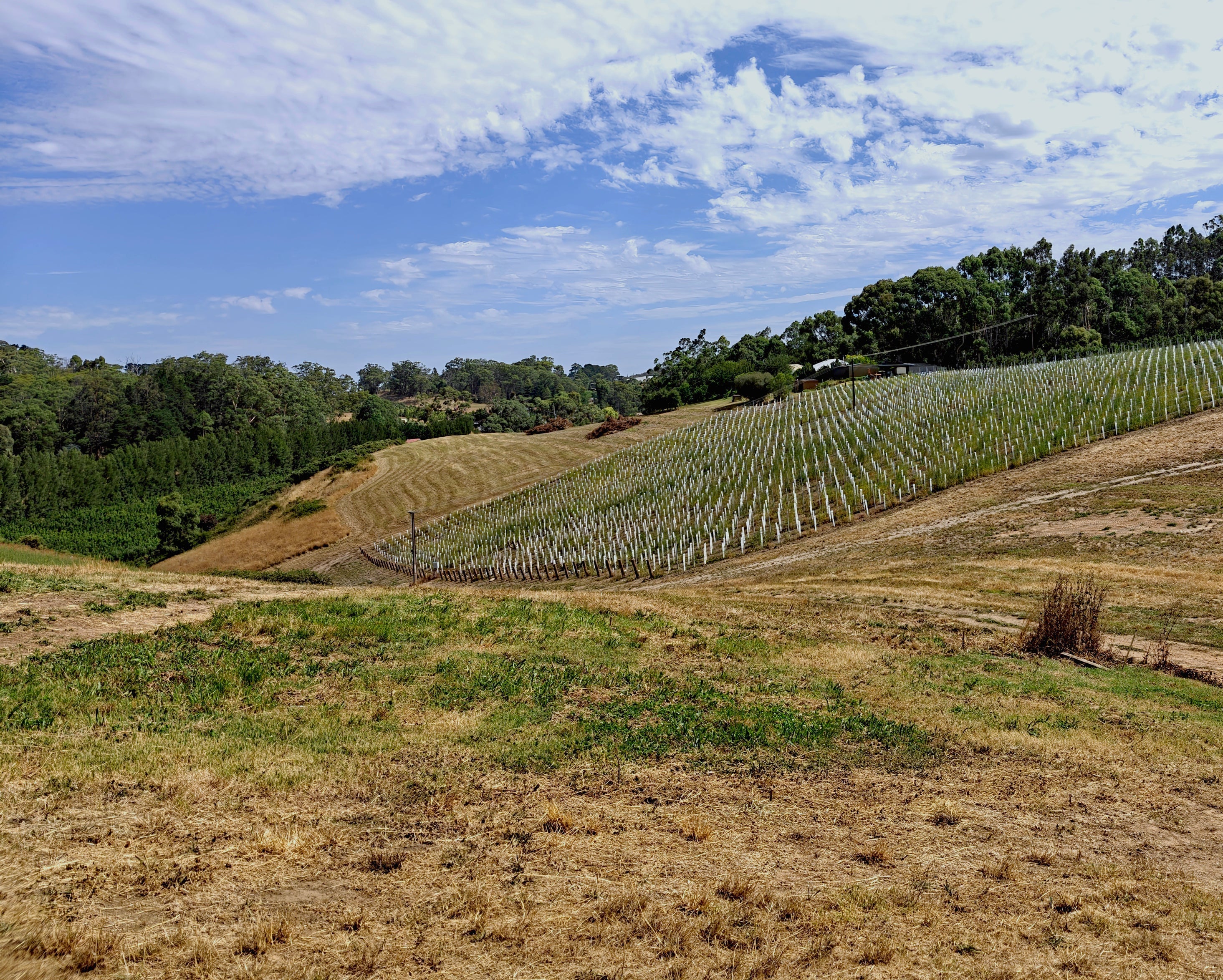
In the 2026, the Adelaide Hills is regarded as one of the premier wine growing regions in Australia, and the world, with a formidable reputation built largely on the back of two Burgundian workhorses: Pinot Noir and Chardonnay. The diversity of the Adelaide Hills’ microclimates and soil compositions is reflected in the wide array of styles of wine produced from these two prestigious grapes, and has they continue to dominate public perception of the Hills even with the growing plethora of alternative varieties springing up in the backyards of forward-thinking young guns.
Given this level of prestige and the adulatory comparisons with that most revered of French wine regions, you may be surprised to learn that Adelaide Hills Chardonnay hasn’t been on the scene since all that long. While the first vineyards appeared with free settlers around 1840, Chardonnay didn’t appear on the scene until over a century later.
Adelaide Hills Chardonnay has existed for less than 50 years. And it’s already going head to head with Burgundian wines with history stretching back to at least 1200AD.
Chardonnay’s appearance in the Adelaide Hills is the direct result of work by the eponymous Brian Croser, respected the world over for his work with South Australian Wines with the brands Petaluma and Tapanappa. Croser identified a site in the Piccadilly Valley just south of Basket Range as being the ideal microclimate for this grape, planting out the Tiers Vineyard in 1979. He was able to retain ownership of the site following the sale of the Petaluma brand and assets to Lion Nathan in 2001, and has since built its reputation under the Tapanappa Label as amongst the finest Chardonnays available from the region.
As documented by James Halliday, Chardonnay underwent something of an explosion through the 1980s and 90s, rising from 0.5% of the total Australian crop in 1980 to over 12% by 1996. While this meteoric rise to fame was aided by a global Chardonnay phenomenon, and as such has tapered and even declined in recent years, the fact of Adelaide Hills Chardonnay’s persistence on the public palate is testament to its resilience and versatility. Halliday refers to Chardonnay as “a winemaker’s dream…of distinctive quality and flavour in almost any combination of terroir and climate”. The Adelaide Hills’ growing season is arguably the pinnacle with regards to Chardonnay, with long warm days ripening the berries fully while cool, crisp evenings preserve the piercing acidity needed to hold the wine’s structure through decades of cellaring.
Our list of Chardonnays at Bottle Shock is testament to its versatility; from light crisp bubbles made here at Unico Zelo, to the wild and free new-wave ridden by Emmalene, to the wine that started it all: Tapanappa Tiers. We’re naturally celebrating Chardonnay May with a Long Lunch, and our four course feast will be paired with not only these flagship examples, but also a never-before-seen drop of Chardonnay’s final form from the Applewood Distillery.
Wherever you are, whatever your taste, there’s an Adelaide Hills Chardonnay with your name on it, so give it a crack this month and show Chardonnay the love it deserves.